
Emotional Dissociation: How Suppressed Anger Becomes Anxiety & Depression
Written by Roland Bal
Emotional dissociation rarely arrives as one event. It builds. What starts as a child suppressing a single emotion — usually anger — grows over years into a layered pattern of anxiety, low self-worth, and depression. The original emotion gets buried, but it never actually leaves. It just keeps shaping what comes next.
Let us look at an example of dissociation and how that grows into complexity over time.
It Often Starts With Anger
It might start with anger in childhood that hasn't been expressed but needed to be suppressed — because expressing your anger, expressing your yes or no, expressing your boundaries would be met with abuse. Psychological abuse. Physical abuse. So you learned to keep that energy inside and not express yourself.
This is not a conscious choice. A child cannot say "I am suppressing my anger to stay safe." The nervous system does it automatically through a freeze response. Anger, in its healthy form, is the energy of boundary. It is what says "no, this isn't okay" and "yes, this is mine." When the environment makes that expression dangerous, the nervous system shuts it down. The energy doesn't disappear — it just stops moving outward.
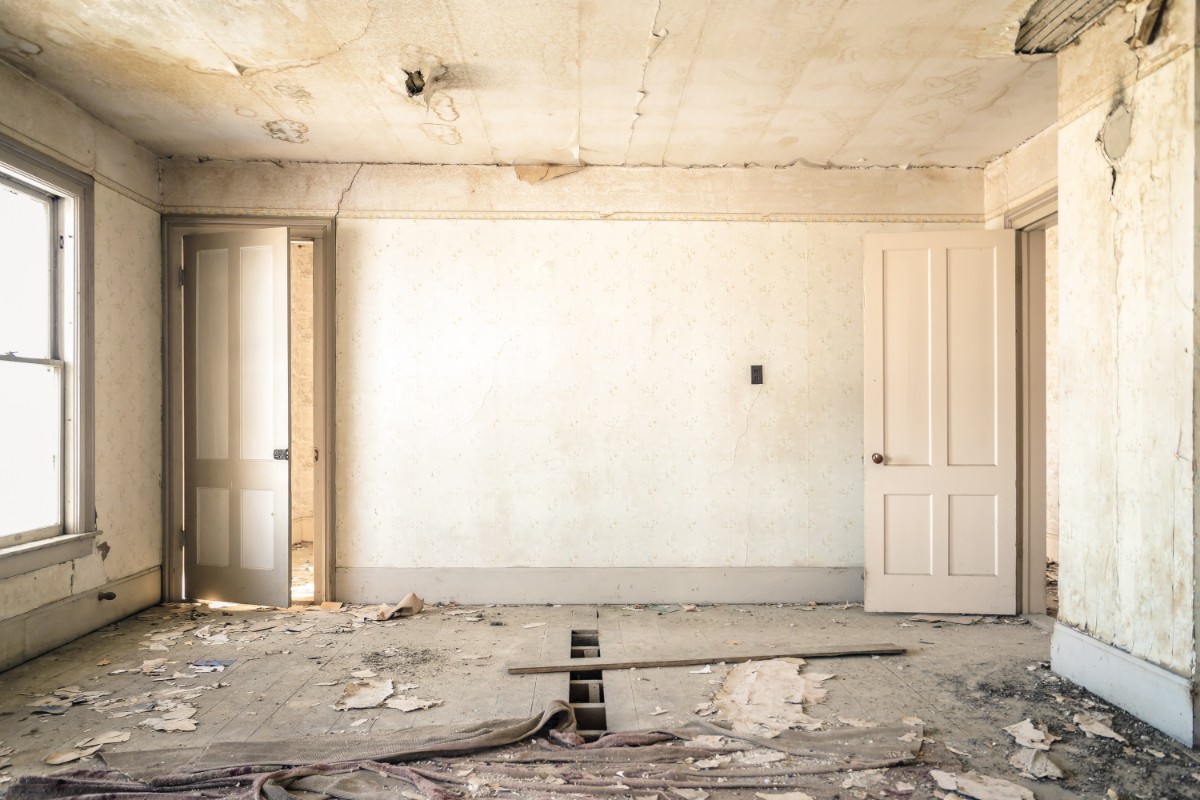
From Suppressed Anger to Anxiety
What happens though over time is that that not expressing your boundaries gives rise to issues of self-esteem and self-worth. And over time it even morphs into anxiety.
This is the part most people miss. The anger does not vanish. It becomes structural. A child who cannot say no learns that their needs do not get to count. That conclusion — implicit, never stated — becomes the architecture of their self-worth. And the energy that was once available for boundary-setting now has nowhere to go, so it circulates inside the body as hypervigilance, restlessness, and the constant low-grade alarm we call anxiety.
Now as an adult, when anxiety is more present for you and the anger becomes more unconscious, your focus will be on overcoming the anxiety. You might want to be more assertive. Be more in control. Be more dominant in certain situations. And so your whole energy gets wrapped up with overcoming the anxiety.
Why Overcoming the Anxiety Always Fails
And because that rests on a deeper emotional pattern, that overcoming of the anxiety will always be self-defeating. And eventually leads into depression or periods of depression.
This is the crux. When you fight the anxiety directly — through willpower, productivity, exposure, control — you are working at the wrong layer. The anxiety is not the problem. The anxiety is the visible edge of a much older suppression. Treating the edge while leaving the suppression intact creates a loop of trauma dissociation: more effort, more exhaustion, more failure, less self-worth. And the nervous system, having run out of energy to keep generating anxiety, eventually drops into the conservation state we call depression.
So you can see from this example how it starts with anger and lack of boundaries, how that morphs into anxiety, lack of self-worth and lack of self-esteem, and then you get wrapped up with trying to overcome that state of anxiety and eventually fall into periods of depression. This seems to be a very prevalent pattern that we nowadays see reflected in society.

What Working With It Actually Looks Like
The way out is not to fight the anxiety or the depression. It is to go back to the layer underneath and meet what was originally suppressed — slowly, in small doses, with enough support that the nervous system can tolerate it without shutting down again.
That usually means somatic work. Not talking about the anger, but feeling where it lives in the body and letting it begin to move. The earliest suppressions are pre-verbal and body-based, so they cannot be reasoned away. The pattern that held everything in place is a body-level pattern, and that is where the work has to happen.
It also means looking at the present-day version of the same dynamic. Where in your life now are you still suppressing the no? Where are you still being agreeable when you mean to refuse? The old pattern is rarely just historical. It is usually still running, just in adult form — as people-pleasing, over-explaining, taking responsibility for other people's feelings, and chronic difficulty asking for what you need.
The progression — anger to anxiety to depression — can run in reverse. Not by attacking the depression or chasing the anxiety, but by carefully restoring the capacity for boundary and refusal at the level of the body. When the energy that was locked down starts to move again, the upper layers begin to dissolve on their own. This is what working through dissociation actually looks like in practice: not breakthrough moments, but the slow return of feeling, agency, and the right to take up space.
Ready to Move Out of Dissociation, Fatigue, and Anxiety?
The Trauma Care Package gives you a structured, somatic approach you can use from home — at your own pace — to work through emotional residue.
With the Trauma Care Package, you can:
- ✦Better manage your anxiety and feeling triggered
- ✦Turn suppressed anger into healthy boundaries and confidence
- ✦Unlock trapped energy from shutdown, chronic pain, and depression
- ✦Work from home, at your own pace — lifetime access, use as often as you need
See What's Inside the Package →
6 eBooks + 12 Guided Meditations — One-time payment


4 Comments
This video was an excellent tidbit! A nugget. If this is a sample of the coursework, I'd find it very effective. Roland Bal's melodious delivery of big concepts is soothing in itself. Thank you for this. And I sincerely hope this finds you well.
Thanks Jennifer. Happy to hear you liked it. I will continue making more of these.
I find the video concept quite helpful, and voice soothing. Reading can be painful (unfortunately, as I love ❤️ to read), and this is so accessible. The mindful state is a constant process in this journey of healing, of course, but video can help to dial one in… Thank you so much!!! Looking forward to more content in this format 😊 Sending love and hope for all ~ we are not alone ✨
Thanks for your comment. I will have some more short vids coming soon!
Leave a Comment